How Modern Warehouses Control Microbial Load Without Toxic Gases
- Miracle EVERYDAY

- Feb 4
- 2 min read
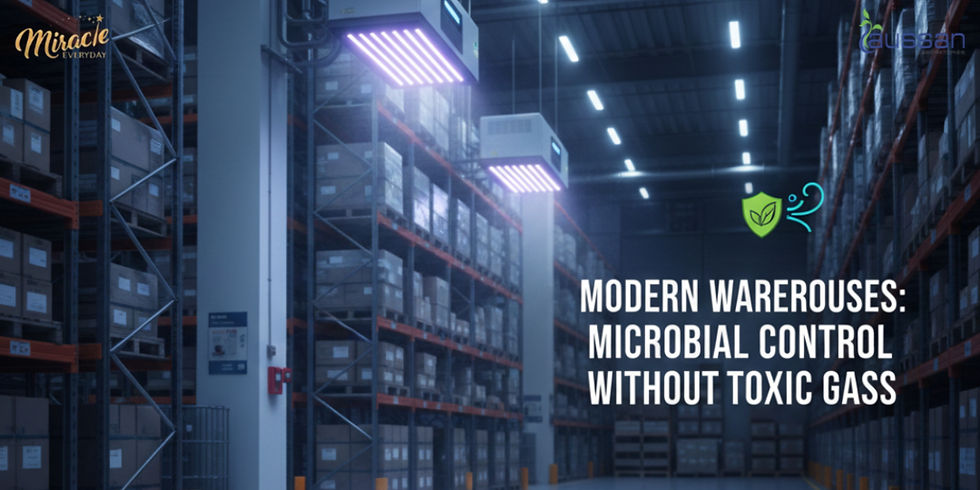
Warehouses Have Evolved—Hygiene Expectations Have Too
Modern warehouses are no longer just storage spaces. They are critical control points in global food and logistics supply chains, handling fresh produce, packaged foods, pharmaceuticals, and export consignments. With higher value goods and stricter safety expectations, hygiene standards inside warehouses have changed permanently.
Traditional fumigation methods based on toxic gases were designed for a different era. Today’s facilities require contamination control that is effective, safe, and compatible with continuous operations.
Why Microbial Load Is a Silent Risk in Warehouses
Unlike visible pests, microbial contamination often goes unnoticed. Bacteria, molds, and airborne spores circulate continuously within enclosed storage environments.
Key contributors to microbial buildup include:
Limited ventilation in enclosed spaces
Moisture and condensation on walls and ceilings
Repeated movement of goods and pallets
Long storage durations
Cross-contamination during loading and unloading
Without active control, microbial load gradually increases, affecting product safety and shelf stability.
The Problem with Toxic Gas–Based Fumigation
Chemical gas fumigation has traditionally been used to control contamination quickly. However, it comes with serious limitations in modern warehouses:
Mandatory evacuation and operational downtime
Health risks to workers
Chemical residues on surfaces and goods
Corrosion of infrastructure
Increasing regulatory restrictions
In facilities that operate 24/7, such disruptions are no longer practical or acceptable.
How Botanical Fumigation Controls Microbial Load
Botanical fumigation uses plant-derived bioactive compounds to control contamination biologically rather than chemically. These compounds act on microbes by disrupting their survival mechanisms.
Botanical solutions help by:
Reducing airborne microbial concentration
Reaching walls, ceilings, and hidden surfaces
Preventing rapid re-contamination after cleaning
Allowing frequent, preventive application
Because they are non-toxic, they can be used in occupied spaces without evacuation.
Why Botanical Solutions Suit Modern Warehousing
Plant-based fumigation aligns naturally with today’s warehouse requirements:
Safe for people and stored products
No harmful chemical residues
Suitable for food and sensitive goods
Compatible with routine hygiene protocols
Supports sustainability and compliance goals
This makes botanical fumigation ideal for warehouses handling food, cold-stored goods, and export consignments.
L44-FG: Enabling Safe, Science-Led Warehouse Fumigation
L44-FG is a botanical fumigation solution developed specifically for warehouses, cold storages, and packhouses. Formulated using plant-derived bioactive compounds, it targets both airborne and surface microbial contamination.
L44-FG supports modern warehouse hygiene by:
Eliminating up to 99.999% of airborne microbial load
Reducing contamination on walls, ceilings, pallets, and equipment
Allowing fumigation without evacuation or downtime
Remaining safe for workers, goods, and infrastructure
It transforms fumigation from a hazardous necessity into a routine hygiene practice.
Conclusion
Modern warehouses cannot afford hygiene practices that rely on toxicity and downtime. As storage environments become more complex and safety standards rise, microbial load must be controlled continuously and safely.
By adopting botanical fumigation solutions like L44-FG, warehouses can achieve effective contamination control without toxic gases—protecting products, people, and operations at the same time. The future of warehouse hygiene is not harsher chemicals, but smarter science.


Comments