Enhancing Dairy Product Shelf Life: The Role of Miracle EVERYDAY 44-D Dairy Disinfectant in Modern Dairy Processing

Updated: Sep 5, 2025

In the dairy industry, maintaining impeccable hygiene standards is paramount to ensuring product quality and safety. A critical component in achieving this is the implementation of effective Clean-In-Place (CIP) systems, which facilitate the thorough cleaning and sanitization of processing equipment without necessitating disassembly. Incorporating advanced disinfectants, such as Miracle EVERYDAY 44-D Dairy Disinfectant, into CIP protocols can significantly enhance sanitation efforts, thereby extending the shelf life of dairy products. Implementing effective measures at each stage can help maintain the milk's integrity throughout the supply chain.
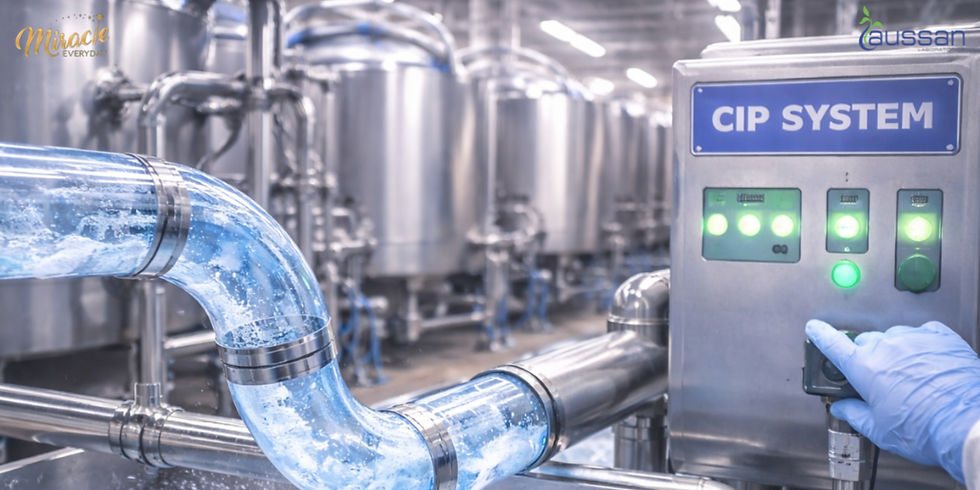
Understanding Clean-In-Place (CIP) Systems
CIP systems are automated cleaning solutions designed to remove residues, microorganisms, and other contaminants from the interior surfaces of equipment used in dairy processing. These systems are essential for maintaining hygiene in environments where manual cleaning is challenging or impractical.
1. Milking Procedures
The process begins with extracting milk from cows, which requires strict hygiene to prevent contamination:
Udder Hygiene: Before milking, the cow's udder and teats should be thoroughly cleaned and sanitized to remove dirt and bacteria.
Milking Equipment: Using sanitized and well-maintained milking machines prevents the introduction of contaminants.
Immediate Cooling: After collection, milk should be rapidly cooled to temperatures below 4°C to inhibit bacterial growth.
Potential Quality Issues: Inadequate cleaning of udders or equipment can introduce pathogens into the milk. Delays in cooling allow bacteria to multiply, leading to spoilage.
2. On-Farm Storage
Once collected, milk is stored on the farm before transportation:
Storage Tanks: Milk is held in bulk tanks that maintain low temperatures to preserve freshness.
Regular Agitation: Gentle stirring prevents cream separation and ensures uniform temperature.
Potential Quality Issues: Malfunctioning cooling systems or infrequent agitation can result in uneven temperatures, promoting bacterial growth and affecting milk composition.
3. Transportation to Processing Facilities
Transporting milk requires careful handling to maintain its quality:
Insulated Tankers: Specialized vehicles keep milk at consistent, low temperatures during transit.
Timely Delivery: Minimizing the time between collection and processing reduces the risk of spoilage.
Potential Quality Issues: Prolonged transportation times or temperature fluctuations can lead to bacterial proliferation and spoilage.
4. Processing at Dairy Facilities
Upon arrival at the processing plant, milk undergoes several treatments:
Quality Testing: Milk is tested for contaminants, antibiotic residues, and overall quality parameters.
Pasteurization: Heating milk to a specific temperature kills harmful bacteria, ensuring safety.
Potential Quality Issues: Failure to detect contaminants or improper pasteurization can compromise safety and shelf life.
Preventing Quality Degradation
To maintain high milk quality throughout these stages, the following measures are essential:
Strict Sanitation Protocols: Regular cleaning and sanitizing of equipment, storage tanks, and transportation vehicles prevent contamination.
Temperature Control: Continuous monitoring ensures milk remains at optimal temperatures from collection to processing.
Efficient Logistics: Streamlined transportation schedules minimize delays, reducing the time milk spends in transit.
Implementing these practices helps preserve milk quality, ensuring that consumers receive safe and fresh dairy products.
Enhancing Sanitation with Miracle EVERYDAY 44-D Dairy Disinfectant
Achieving superior sanitation is now more accessible with Miracle EVERYDAY 44-D Dairy Disinfectant:
Organic Solution: Harnessing natural ingredients, it offers an eco-friendly approach to dairy hygiene.
Versatile Application: Ideal for fogging milk cans and CIP (Clean-In-Place) systems, ensuring comprehensive sanitation.
Proven Results: Users have reported significant improvements in milk quality, including enhanced Methylene Blue Reduction Test (MBRT) values and reduced microbial counts.
Elevate your dairy's hygiene standards and extend the freshness of your milk products by integrating Miracle EVERYDAY 44-D Dairy Disinfectant into your processing and storage protocols. Experience the benefits of advanced sanitation and contribute to delivering the highest quality dairy products to your consumers.
Appeal to Dairy Stakeholders
As dairy product manufacturers, dairy owners, and retailers, adopting Miracle EVERYDAY'44-D Dairy Disinfectant into your sanitation protocols is a strategic move towards enhancing product quality and consumer trust. By ensuring superior hygiene standards, you not only comply with safety regulations but also deliver products that stand out in the market for their extended freshness and safety.
Embrace this advanced sanitation solution to safeguard your brand's reputation and contribute to a healthier, more sustainable dairy industry.
For more information and to incorporate Miracle EVERYDAY 44-D Dairy Disinfectant into your operations, visit Miracle Everyday.



Comments