Preventing Cross-Contamination in High-Volume Dairy Operations
- Miracle EVERYDAY

- Feb 12
- 2 min read
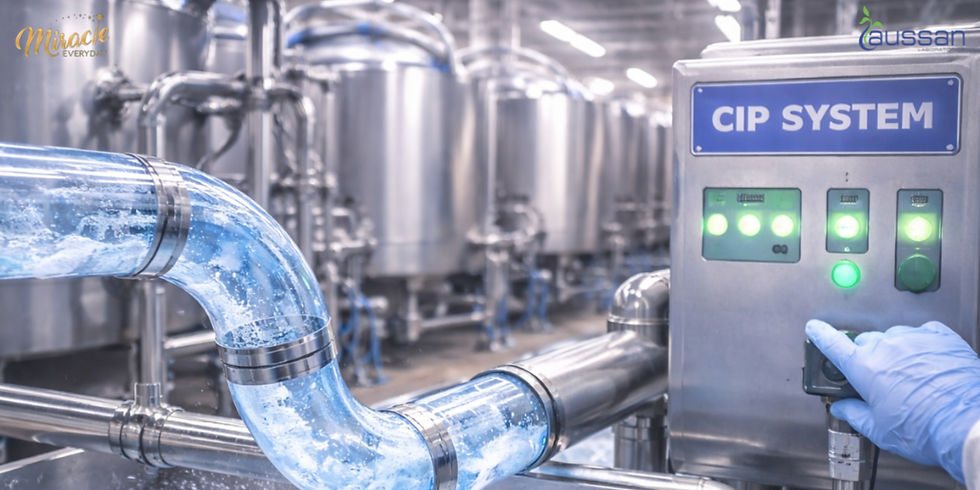
When Scale Increases, Contamination Risk Multiplies
High-volume dairy operations are designed for efficiency—continuous milk collection, rapid processing, and high throughput. While scale improves productivity, it also increases one critical risk: cross-contamination.
Milk, equipment, surfaces, and people interact continuously in large dairy facilities. Without precise hygiene control, contaminants move easily from one stage to another, compromising milk quality, shelf life, and food safety.
Understanding Cross-Contamination in Dairy Environments
Cross-contamination occurs when microorganisms transfer from one surface, product, or process to another. In dairy operations, this transfer often happens silently and repeatedly.
Common pathways include:
Milking equipment and pipelines
Collection tanks and storage vessels
Floors, drains, and wet surfaces
Hands, footwear, and cleaning tools
Reused water and cleaning cloths
In high-volume setups, even small hygiene gaps can spread contamination rapidly across large batches of milk.
The Limits of Routine Cleaning Practices
Routine cleaning removes visible residues but does not always eliminate microorganisms—especially in dairy environments rich in proteins and fats.
In high-volume operations:
Water rinsing alone spreads microbes
Harsh chemicals may leave residues
Inconsistent disinfection disrupts hygiene flow
Beneficial lactic acid bacteria may be unintentionally affected
Effective control requires residue-free, selective, and repeatable disinfection
How L44-D Supports Cross-Contamination Control
L44-D is a plant-based dairy disinfectant formulated specifically for high-volume dairy environments. Its botanical formulation allows effective microbial control without harming beneficial lactic acid bacteria.
L44-D supports contamination control by:
Reducing microbial load on equipment and surfaces
Preventing biofilm build up in wet areas
Allowing frequent sanitation without residues
Supporting hygiene consistency across shifts
Maintaining milk quality and safety
By integrating L44-D into daily sanitation protocols, cross-contamination risk can be significantly reduced.
Hygiene Consistency Is the Real Control Point
Preventing cross-contamination is not about one-time deep cleaning—it is about consistency across every process stage.
Facilities that maintain consistent sanitation observe:
Improved milk shelf life
Lower spoilage and rejection rates
Better audit and compliance outcomes
Reduced hygiene-related losses
Sanitation becomes a system, not a reaction.
Conclusion
In high-volume dairy operations, cross-contamination is one of the biggest threats to product quality and safety. Speed and scale magnify hygiene gaps, making preventive sanitation essential.
With science-backed, plant-based disinfectants like L44-D, dairy facilities can control microbial movement, protect milk integrity, and maintain hygiene standards without chemical stress. Preventing cross-contamination is not just about cleanliness—it is about protecting every litre of milk that moves through the system.


Comments